Hand washing facilities in Bamenda
2020 | Cameroon > Northwest Region > Mezam > Bamenda (322,889 people)


To contain the spread of the coronavirus pandemic our volunteer Njini Daniel has designed and built handwashing stations which can be operated by foot. We installed them at three local schools, the Cameroon Baptist Convention Primary School (at Faith Mile One Baptist Church, Upstation), the Ecole Champion School (Upstation), and the St. Brigitte Bilingual Nursery and Primary School (Upstation). Over 1300 students in Bamenda, now, for the first time, have handwashing facilities with soap and water at their schools, to prevent the spread of disease. Through this project, we also raised awareness about the importance of hygiene. On the first day, the kids were very excited, as can be seen in the video above. Ever since then, handwashing was carried out regularly and in an orderly fashion. This project is in support of UN Sustainable Development Goal 6 to “ensure availability and sustainable management of water and sanitation for all”, especially Indicator 6.2.1b on the “proportion of population using a handwashing facility with soap and water”, as well as in line with the basic hygiene definition for schools of the WHO / UNICEF Joint Monitoring Programme for Water Supply. Thank you for your donations to acquire necessary materials!
Donate now: To provide more schools with handwashing facilities and protect children from diseases.
Clean water for Ntenefor
2020 | Cameroon > Northwest > Mezam > Bamenda 3 > Bamenda Town > Ntenefor


The community of Ntenefor had already harnessed a local spring, when it asked Farmer Tantoh for further help. Together we built a water tank of 9000 liters and connected it to two stand pipes to provide clean water for the local community. However, during the dry season we became increasingly aware that the initial harnessing of the spring was not done properly. We are looking forward to re-harness the spring properly as well as re-constructing the spring catchment in order to guarantee access to clean water for the community throughout the year.
Donate now: For purchase of necessary materials.
Clean water for Njirong
2017 | Cameroon > Northwest Region > Donga-Mantung > Ndu > Njirong (2,737 people)


We built two water tanks for this project. One of 20,000 liters up hill and another one of 8,000 liters, 600 meters further down in the valley. We connected the water tanks with underground water pipes to five water taps. We also built three inspection chambers for the water pipes. Currently we are in the process of surrounding the water tank in the valley with a robust stone fence for protection. As we receive further donations we plan to add a solar pump for ease of use. We want to thank the White Feather Foundation, the Karlinger family, as well as all the individuals whose donations contributed to this project.
Clean water for Bambili
2015 | Cameroon > Northwest Region > Mezam > Tubah > Bambili (7,418 people)


The University of Bamenda is attended by a number of blind students who have to walk far to get clean water (especially during the dry season, up to half a kilometer). To lighten their burden we purchased water tanks and installed them in their rooms. Our volunteers clean and refill them with fresh drinking water once per week throughout the year, except for the holidays when the students go home to visit their families. Now the students don’t need to worry about getting drinking water anymore and have more time to study.
Clean water for Sisia
2015 | Cameroon > Northwest Region > Mezam > Bamenda 3 > Sisia I and Sisia II
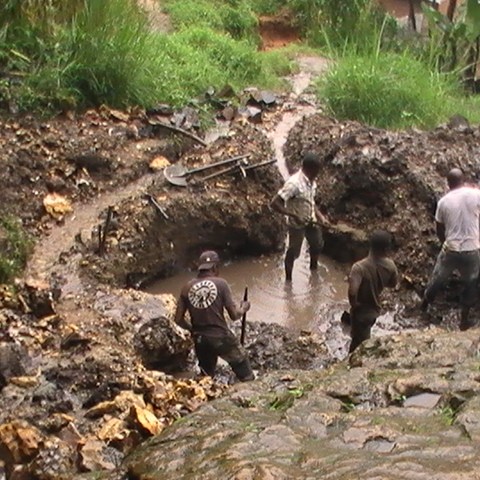
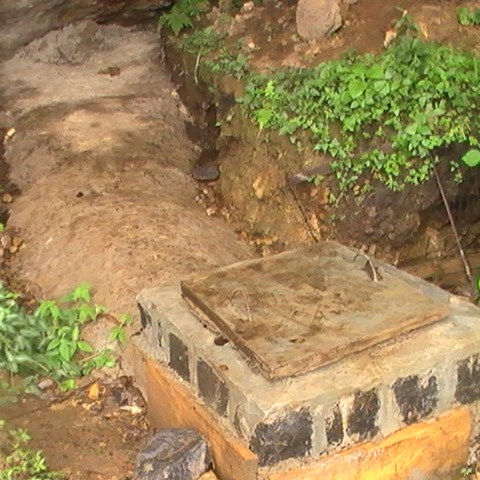
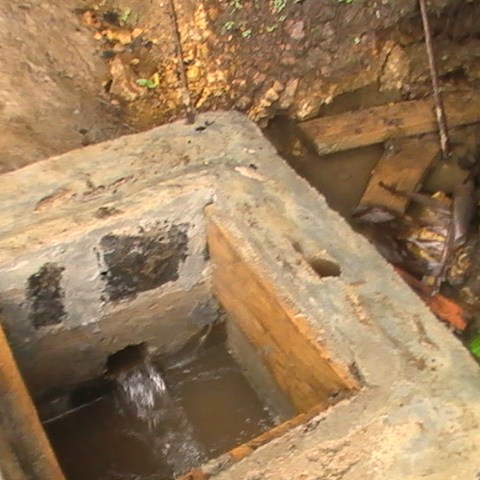
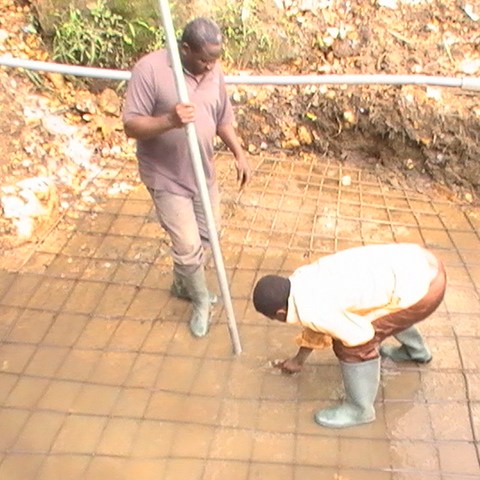
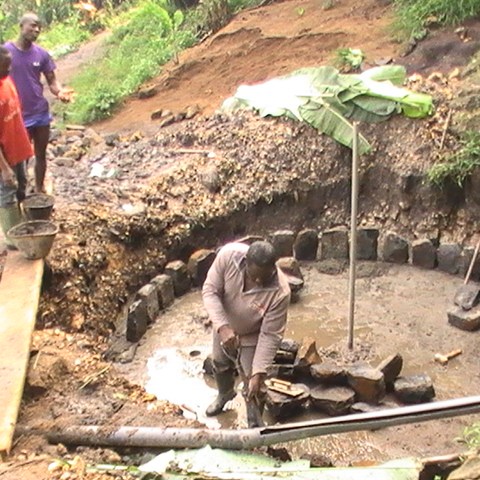
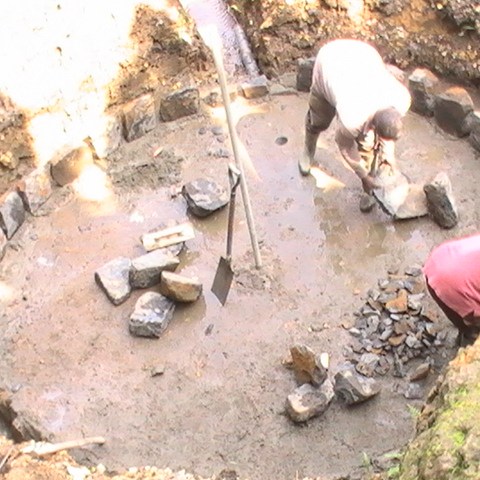
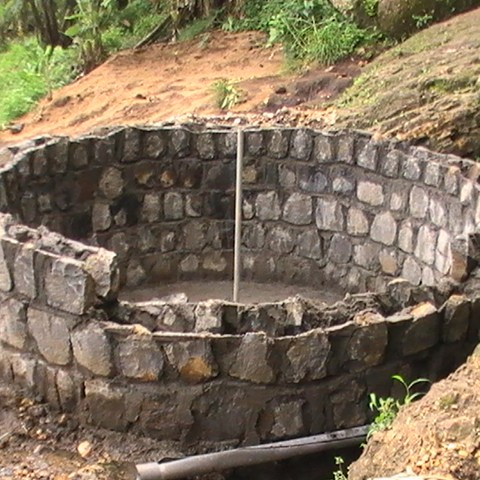


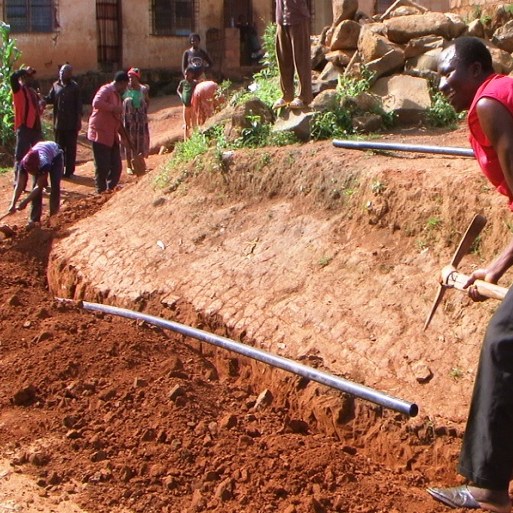
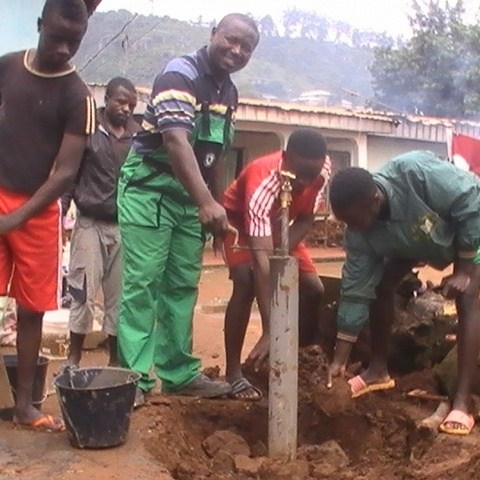
We harnessed a spring under a rock, dug in underground water pipes, built a water tank of 20,000 liters and 7 stand pipes. The community participated actively in this project and donated materials like gravel and cement, and above all, their labour, from start to finish. We thank the Lincoln Heights Missionary Baptist Church, the White Feather Foundation, and our individual donors around the world.
Clean water for Akweto
2014 | Cameroon > Northwest Region > Donga-Mantung > Misaje > Akweto (1,658 people)


The community of around 100 Fulani in this area speak the Fula language, mostly raise cattle for food and income, and adhere to Islam. We harnessed a spring, dug in pipes and built a stand pipe providing clean water, as well as a separate cattle drinking trough 50 meters away. Now the cattle will no longer pollute the drinking water, and the Fulani have direct access to clean water. As of 2018, there have been no more cases of typhoid fever. We thank everyone whose generous donations contributed to this project. With further donations we would like to install low cost solar panels and batteries in order to provide the community with electricity so the children have light do their homework in the evening.
Clean water for Mambu
2013 | Cameroon > Northwest Region > Mezam > Bafut > Bafut Rural > Mambu


We harnessed nine springs and channeled them into a water collection chamber. We built a water tank of 16,000 liters and connected two stand taps. In addition, we constructed steps and hand railings leading up to the site. Due to the regions water scarcity, even people from the distant Bamenda (a commune of 322,889 people in Mezam, Northwest Region) carry water from the site. We thank all our donors and the Karlinger family for their support.
Donate now: For water pump purchase and installation so that elderly community members don’t have to rely on stairs.
Clean water for Binju
2013 | Cameroon > Northwest Region > Donga-Mantung > Nkambe > Nkambe Town > Binju


To provide the local primary school with clean water and sanitation, we harnessed a spring, built a water tank of 5,000 liters from which the water is distributed, through a system of two kilometers of underground water pipes, to four stand pipes. This included digging a trench to the school. Furthermore, we built a wash basin for locals to wash their clothes. We also fenced the catchment area to prevent stray animals from trespassing. The project is now making water access easier and reducing the distance water has to be carried daily, decreasing the potential of transmitting water borne diseases as well as limiting the strain on other water sources in the area, which is especially important during the dry season.
Clean water for Nkambe
2009 | Cameroon > Northwest Region > Donga-Mantung > Nkambe (63,032 people)


We drilled two wells which now provide locals with clean drinking water. Currently the pump of one of the wells needs to be repaired. We are waiting for funds to carry out this repair. We thank the Student Association for International Water Issues for their support.
Clean water for Northwest
2009 | Cameroon > Northwest Region (1,728,953 people)
We are protecting springs throughout the region in an effort to combat water scarcity. So far we have protected 7 springs: 4 in Nkambe (a commune of 63,032 people in Donga-Mantung) and 3 in Bamenda (a commune of 322,889 people in Mezam). At each site, we planted grasses, plants and trees at varying distances around the spring. In a range from 0 to 20 meters around the spring grasses like kikuyu- or elephant grass and rhizomes, as well as shallow root crops like sugarcane or pineapple, were planted. From 20 to 25 meters around the spring agroforestry trees like Acacia, Leucaena and Calliandra were planted. From 25 to 50 meters, fruit- and timber trees like Mahogany and Iroko were planted. All those grasses, plants and trees were planted during dry season in order to protect the watershed through stabilizing the water table and preventing erosion when the rainy season comes. These projects also especially focus on educational measures to sensitize the local communities to proper watershed management. The local inhabitants are now able to carry their needed water over smaller distances and even use the overflow for gardening.
Wood bridges in Bamenda
2017 | Cameroon > Northwest Region > Mezam > Bamenda


Especially during the peak of the rainy season a lot of accidents occur near overflowing rivers. People have suffered severe injuries including bone fractures, occasionally resulting in lifelong handicaps. Children have even drowned in gutters. To avoid future tragedies we have built three small wood bridges on heavily frequented spots in cooperation with the local community. With the help of your donations we are looking forward to build many more.
Roundabout and flowerbed in Nkambe
2009 | Cameroon > Northwest Region > Donga-Mantung > Nkambe (63,032 people)


We constructed a roundabout and flowerbed, which support the soil and prevent erosion, thereby conserving the soil and making traffic more safe. Furthermore it’s a beautiful sight including plants like Gerbera Durantha, Salvia, Cordyline, Spiderplant and St. Peter for locals to enjoy. We especially thank Yi Zhang and Masumi Hayashi Smith for their support.
Flower conservation in Ndu
2008 | Cameroon > Northwest Region > Donga-Mantung > Ndu (73,955 people)
We donated flowers to the Environmental Club of the Cameroon Baptist Theological Seminary (CBTS) and helped them to plant the flowers throughout the commune, in our effort to expand conservation- and sustainable landscaping projects.
Botanical Gardens in Nkambe
2005 | Cameroon > Northwest Region > Donga-Mantung > Nkambe (63,032 people)


We created the Chua‐Chua Botanical Gardens. Before the establishment of the gardens, the area was laden with brush and debris. After much hard work, we transformed it into a lavish garden of local and exotic plants which now serves as an open community space to bring people together and cherish the environment. People gather at the site for various social events. Schoolchildren make regular field trips to the gardens to study plants and insects. The presence of the gardens has played a crucial role in increasing the community’s interest in understanding and preserving the environment. In response to the building of the gardens, local residents have started cultivating their own organic gardens. With your financial support we would like to continue the work in the gardens including:
- installing an irrigation system,
- planting various additional trees and plants,
- installing solar lamps to light the gardens in the evening and during celebrations,
- constructing a washing point to protect the nearby river from pollution,
- installing benches and huts for rest and relaxation,
- building two small bridges and paving all paths with permeable pavers,
- fencing the gardens and eventually
- opening a canteen and handicraft workshop to create income to sustain the gardens in the future.
We especially thank Albert Onega for his support.
Sustainable landscaping in Bambili
2003 | Cameroon > Northwest Region > Mezam > Tubah > Bambili (7,418 people)


In 2003 Farmer Tantoh initiated a project at the village’s Baptist church. The project is now continued by our foundation. The bushy and unkempt yard around the compound was ploughed through and transformed into a beautiful organic lawn including several flowerbeds. This not only helps in protecting the church from soil erosion, but also created a space for children to play and learn about biodiversity conservation as well as members of the congregation to gather together. The project received financial aid from the church. With your donations we are looking forward to further this project by paving the yard to make the church more accessible as well as planting trees and flowers in order to provide shade and protect local biodiversity. We thank WWOOF UK for their support.
Organic lawns, soil- and seed conservation in Northwest
2001 | Cameroon > Northwest Region (1,728,953 people)


In 2001 Farmer Tantoh started running sustainable landscaping services. He and other locals started to plant organic lawns for members of their communities on the condition that they would later donate their seedlings for future projects, thus conserving local biodiversity. In addition, the creation of organic lawns and the plantation of plants with deep roots conserves the soil by protecting it from erosion, which also adds significantly to the structural integrity of the houses. The project is now continued through our foundation for more than 100 homes in local villages. It’s growing popularity has also led many local inhabitants to plant organic lawns independently. Prominent examples in the area include:
- Nkambe’s hospital and petrol station (Nkambe is a commune of 32,900 people in Donga-Mantung, Northwest Region)
- Kumbo’s Integrated School for the Blind (Kumbo is a commune of 83,479 people in Bui, Northwest Region)
- Bambili’s Student Development Centre (Bambili is a community of 7,418 people in Tubah, Mezam, Northwest Region)
“Garden of Eden” in Binju
2001 | Cameroon > Northwest Region > Donga-Mantung > Nkambe > Nkambe Town > Binju


In 2001 Farmer Tantoh initiated a project at the village’s Baptist church. The area around the church was bushy, inhabited by wild animals and filled with broken bottles and litter before he began his work there. He and other members of the local community ploughed the yard and planted organic lawns and flowers, some of which came from Farmer Tantoh’s own collection while others were collected from the wild and some were donated. The grass and flowers make the place pretty, while their roots prevent soil erosion which threatens the structures stability. Their seeds are now used for various other sustainable landscaping and gardening projects in the area. Members of the congregation thereby also learned about the importance of environmental protection and sustainability. The church provided materials for the project and assisted in fencing the area. After completion, the renewed area around the church was proudly named “Garden of Eden” by the members of the congregation. The project is now continued by our foundation. We thank Gregor Moray Smith and his family in Scotland as well as WWOOF UK.
A huge forest was on fire. All the animals were running for their lives, except a tiny humming bird who said: “We can do something to stop this fire.” So it flew as fast as it could to get water with its beak to sprinkle it on the fire. The other animals were laughing at it. “Who do you think you are? You are too small to stop this fire!” said the elephant with its large trunk. The humming bird replied: “I am doing the best I can. To me, this is what everyone should be doing, for if everyone was doing a little, no one would have to do a lot.”